Golden Greece generation fuelling 2030 hopes
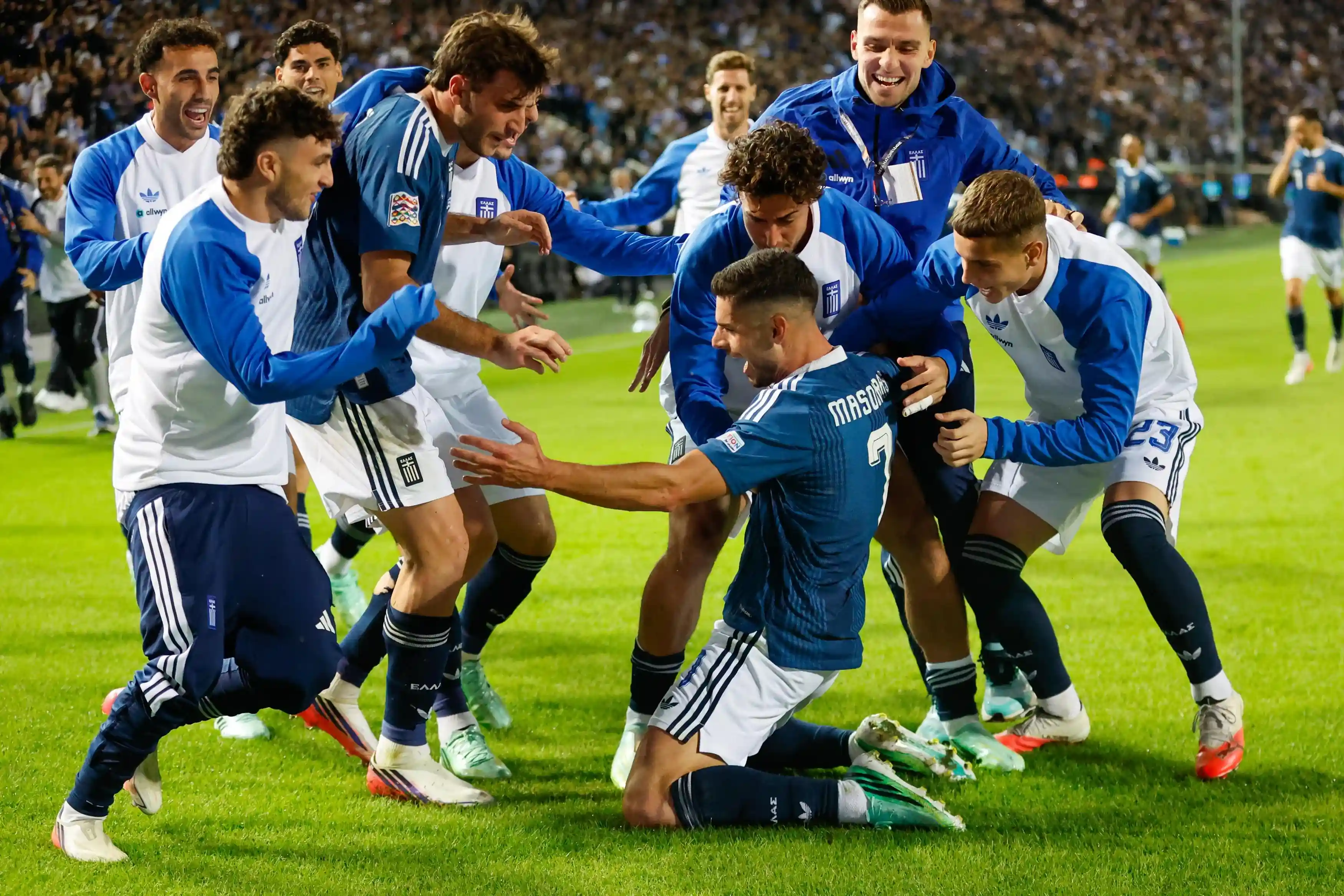
Greece currently unbeaten after four games in League A of the UEFA Nations League
They did not qualify for World Cup 2026
Young stars have the nation dreaming of a return to global finals in 2030
While 48 teams were battling it out in the FIFA World Cup 2026™, Greece were once again left watching from the sidelines.
The 2004 European champions only managed to finish third behind Scotland and Denmark in their UEFA qualification group, meaning they failed to qualify for their third consecutive World Cup. Greece last competed in a World Cup in 2014, when they reached the Round of 16 and achieved their best result in the competition to date.
Just a few months after their disappointing qualifying campaign, however, the mood around the Ethniki has transformed. In the UEFA Nations League, Ivan Jovanovic’s team have held their own against Europe’s elite in their first appearance in League A and, after just four games, their initial target of survival has turned into a realistic chance of reaching the quarter-finals.
For their first season in League A, Greece were drawn against some heavyweight opponents in Germany, the Netherlands and Serbia.
“We are delighted to be in the draw for the top tier for the first time in our history,” said Jovanovic in February. “Our goal is clear – we want to stay in the top league. We know there are some tough games ahead of us, but we will be ready to give everything to achieve our objective.”
Four matchdays later, Greece have already far exceeded these expectations. A 2-1 win in Serbia was followed by a historic 1-0 victory in Germany – Greece’s first-ever win over the Germans. They then battled to a 2-2 draw against the Netherlands, before holding Germany to a goalless draw in the return fixture to remain unbeaten.
Greece are now level with the Netherlands on eight points at the top of Group A2 ahead of the final two matchdays in November. Three more points from their remaining games, away to the Netherlands and at home against Serbia, could be enough to take Greece through to the quarter-finals.
The victory in Germany, in particular, showed how far the team has come. Greece allowed their opponents to control long spells of the game in possession, but defended with discipline and posed more of a threat themselves as the match went on, before Dimitris Kourbelis ultimately scored the deciding goal.
Jovanovic saw this as proof of his team’s growing confidence.
“Germany are a team with a lot of quality, so it was only natural that they would control the game,” he said. “But we played with a lot of self-confidence. In the second half, we took a bit more initiative, showed much more of a threat and eventually won the game.”
Greece shone again against the Netherlands. After a strong first half, they led 2-0 thanks to goals from Fotis Ioannidis and Giorgos Masouras, before the Oranje hit back to equalise late on.
Three days later, in their return match against Germany, the team showed a different side to their play, with less attacking flair but more defensive resilience. Goalkeeper Konstantinos Tzolakis made a string of saves to secure the point.
It’s also striking just how young many of the players behind this revival are: Konstantinos Karetsas (Borussia Dortmund) is just 18, Christos Mouzakitis (Hull City) and Charalampos Kostoulas (Brighton and Hove Albion) are 19, Konstantinos Koulierakis (Roma) is 22, Konstantinos Tzolakis (Hull City) and Christos Zafeiris (PAOK) are 23 and Christos Tzolis (Arsenal) is 24. Many of the players have also established themselves in Europe’s biggest leagues. Another big talent, 23-year-old Giannis Konstantelias (Dortmund), is currently sidelined with an ACL injury.
Jovanovic had already highlighted the team’s development when they were promoted to League A.
“The Nations League was an opportunity for this team to take a step forward," he said. "Expectations have grown, but the team are living up to them. It’s a rejuvenated team and they have a great future ahead of them.”
Germany coach Jurgen Klopp also described the Greeks as a “golden generation” ahead of their first meeting – and the nation's recent performances suggest they have at least narrowed the gap between them and Europe’s best sides.
Jovanovic’s team still have plenty of time before World Cup 2030, but the road back to football's biggest stage has already got off to a promising start.