Japan embark on a new cycle
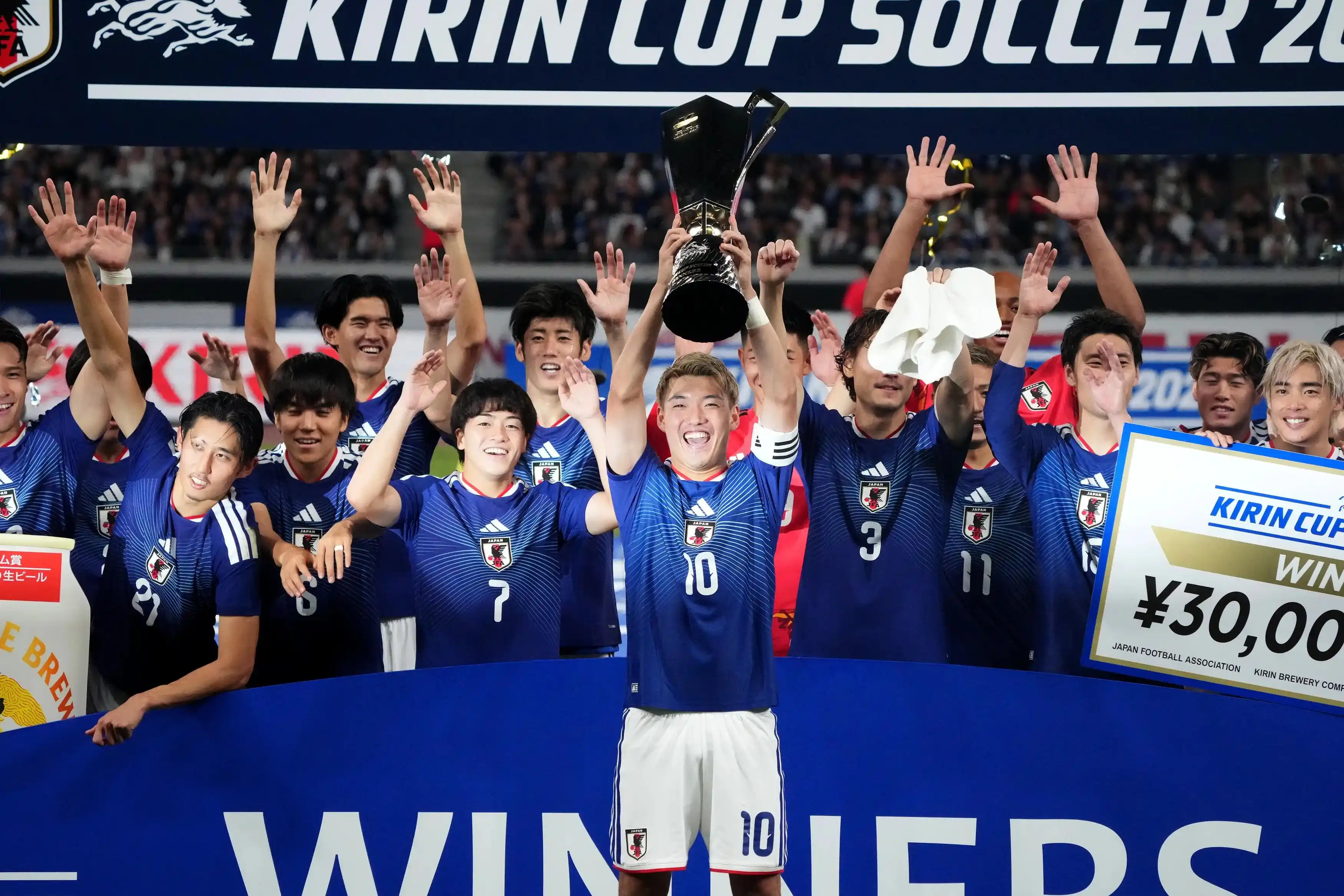
Across the recently concluded international window, Japan faced their first four games following the conclusion of the FIFA World Cup 2026™. Including a penalty shootout victory, the Asian powerhouse recorded four wins from four against Uruguay, Venezuela, Ecuador and New Zealand.
Coach Hajime Moriyasu took the opportunity to introduce a number of new players into the core squad and experimented with a fresh tactical approach. FIFA reflects on three key takeaways from Japan’s recent friendlies as they look ahead to the 2027 AFC Asian Cup and, of course, to the next World Cup qualification cycle.
New talent stokes an even fiercer competition for places
One major theme from these four games has been the emergence of new players. The first series of games following the World Cup was a chance for many young stars to impress. Several players made their full international debut and put in solid performances, while Kuryu Matsuki and Kento Shiogai both found the net.
Nonetheless, the squad retained its core, with many players who had appeared at last summer’s tournament returning to duty. Rather than a complete generational shift, this has been a refresh and refinement of the squad, with the young players joining an existing unit and competition for places becoming a greater factor.
For Moriyasu, the extra choice has been a real boon. By bringing together a variety of players with a range of strengths, he is able to adjust the team’s style to match the opponent and the state of play. Even players with a World Cup under their belt know that they cannot take their spot for granted, while up-and-coming stars know that they need to seize the opportunity to stake their claim. Such a wealth of talent and competition for places represents a major asset for Japan as they look ahead to 2030.
Building an attack around Ayase Ueda
While many young players seized their chance to shine, established striker Ayase Ueda once again demonstrated his presence up front. As well as giving opposing defenders a torrid time, he also showed some clinical finishing, providing a timely reminder of his importance to the team as he looks to lead the line in the coming years.
The opening goal against New Zealand provided an excellent demonstration of the potential of the nation's attacking unit. Following interplay between multiple Japanese players on the right of the pitch, Ueda found space in front of goal to finish with his left foot. It was a chance created not on the back of individual brilliance, but rather as a result of a team move and a superb finish.
Japan are blessed with some excellent creative talent, not least Takefusa Kubo and Ritsu Doan, while the likes of Daizen Maeda and Keito Nakamura complement a varied attacking arsenal. At the centre of it all stands Ueda, who will be looking to link up with his talented team mates and rack up the goals. With the Japanese star continuing to mature as a striker, he is likely to be a key figure as Japan set off on the road to 2030.
From a rigid back three to a Swiss Army knife
Perhaps the most fascinating tactical experiment was the 4-2-3-1 formation deployed against New Zealand. Departing from the usual three-man backline, this formation pushed Ritsu Doan forward into the right-wing position, with debutant Shuto Nakano playing right back. This added a new dimension to Japan’s attack, with Doan and Kubo combining on the inside and the full backs overlapping on the wings.
The changed shape was effective in bringing out the individual strengths of the forward line. Doan, who had often played at wing back in the past, relished a position closer to the opponent’s goal and netted the winner against the All Whites. One big plus of the back four was the width created by the full backs. This allowed both Kubo and Doan to operate centrally and in dangerous areas in front of goal.
However, there were some issues to iron out. By taking up high positions, the full backs vacated space at the back, allowing the opponents to get in behind when Japan lost the ball. They faced counter-attacks against New Zealand, and managing risk when sending players forward will be something that the team needs to work on in future matches.
However, it is important to note that this experiment does not necessarily represent a shift from a back three to a back four. The key point is the team’s newfound ability to use different formations – to counter opponents, to respond to various game states or complement the players on the pitch – while preserving what they had built up prior to the 2026 tournament.
The developments over the last four matches represent an evolution rather than a revolution, with new players and fresh ideas being added to the team’s existing foundations. Japan will make their way into the 2027 AFC Asian Cup and the 2030 World Cup having added new strings to their bow, in terms of both personnel and tactics.