Epee: Endurance and self-sacrifice are Cameroon’s strengths
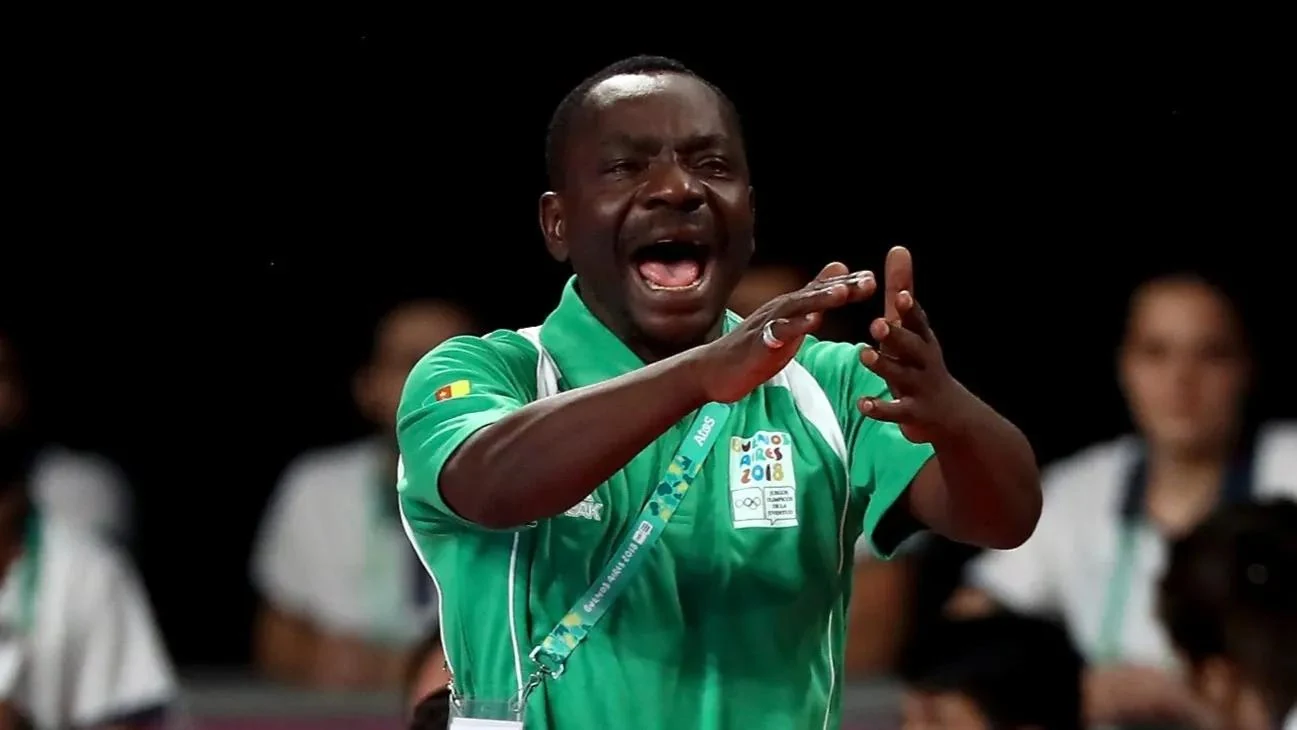
Les Lionnes Indomptables are set to compete in the Women’s Youth Olympic Futsal Tournament next month
West Africans to square off against Costa Rica, IR Iran and Italy in the group stage
Head coach Louis Rene Epee, who led his country at the inaugural edition in 2018, spoke to FIFA
“The Olympics were a wonderful experience.”
Some eight years on, Louis Rene Epee still has fond memories of the Women’s Youth Olympic Futsal Tournament in Buenos Aires. Although his Cameroon U-18 team failed to progress beyond the group stage despite winning two of their four matches, the self-proclaimed “jack of all trades” in the world of Cameroonian futsal took great satisfaction from having gained “experience in grassroots coaching and high-level football training through the use of futsal”.
Proof, if any were needed, of the value of Cameroon’s involvement at the showpiece event can be found in Colette Ndzana, who competed in Buenos Aires and went on to captain Cameroon’s women’s senior football team to glory at the CAF Women’s Africa Cup of Nations earlier this year.
And who knows? A similar destiny may await one or more of the players that Epee will be taking to the Youth Olympic Games from 1 to 12 November 2026. For the first time in history, the event will be held on the African continent, in Dakar, Senegal – a “major opportunity that must be seized”, according to the 62-year-old visionary.
In an exclusive interview with FIFA, Epee tips several of his starlets for the top and shares his team’s strengths ahead of their group-stage campaign. He also reflects on his memories of Buenos Aires 2018 and the development of futsal in his home country.
FIFA: Let’s start at the beginning: how did you discover futsal?
Louis Rene Epee: I was drawn to futsal naturally, having always been a sportsman at heart. I started out playing handball, and futsal immediately suited the way I see and think about the game. In 1996, I joined a working group that was set up to introduce futsal to Cameroon. Then, in 1998, when that work led to the creation of a dedicated futsal league, I founded Cameroon’s first futsal club, National Mfandena 98, which is now the most decorated team in the country. I was a player, the president, a coach – a real jack of all trades.
And then you started coaching Cameroon’s futsal national teams across the men’s, women’s and youth?
It was a long, hard journey to get to that point. I first introduced futsal into football teams in Cameroon. We had to find the right methods, time and equipment. I started off by being given ten minutes to do the odd futsal drill here and there during football training sessions, then 15, and eventually built up to 20 or 30 minutes. Then, in 2014, Tonnerre Kalara Club de Yaounde gave me the opportunity to incorporate futsal into their football training programme. That played its part in them finishing top of Cameroon’s second tier. I stepped away from football immediately afterwards so I could return to futsal and spearhead the creation of a league, which was initially for men only.
Later, during Samuel Eto’o’s first term as the Cameroonian Football Association President, we rolled out women’s futsal. The inaugural national women’s tournament was a great success. In 2018, we also put together a U-18 futsal national team for the Youth Olympic Games. It was a new experience, and it was also the first time I’d ever coached girls. That was when the current captain of Cameroon’s football national team, Colette Ndzana, shot to prominence, along with at least four other players who are now part of the national-team set-up in football and have gone on to become African champions.
You mentioned Buenos Aires 2018 – what do you remember about that competition?
The Olympics were a wonderful experience. Getting my first taste of a global competition was educational and enlightening, and it was thrilling for the youngsters. Above all, it laid the foundations for high-level football development. The proof is that four of the girls who took part in the 2018 Youth Olympic Games went on to play in the U-17 Women’s World Cup in Uruguay in that same year. The girls also learned some important lessons: work with what you have, apply the concepts you’ve been taught, trust your instincts and stick to a game plan. That’s the secret to success.
We still gained some valuable takeaways from the defeats we suffered at the Youth Olympics. For example, we lost 6-2 to Japan, a well-structured and organised side that were tactically strong, quick and well-coached. We ran out 9-1 victors against the Dominican Republic, a team coached by Argentinian professionals, then Portugal defeated us 6-0, but we beat Chile 5-0. So, there were lessons to be learned. Japan stood out for their game intelligence and exceptional sporting discipline, whilst Portugal impressed us with their rigour, professionalism and tactical nous.
What are Cameroon’s strengths?
When it comes to elite-level futsal, endurance and self-sacrifice are our greatest strengths. Those are real assets because so much of the game is about managing transitions and maintaining your performance levels throughout the match. There’s a recognisable physical dimension to Cameroonian futsal. The players are also psychologically and technically strong.
Which members of your squad should we watch out for at the upcoming tournament?
We have Andrea Mimbama – remember the name! She’s actually already an international for the U-17 football team, and she’s also an exciting prospect for the future of futsal in Cameroon, across Africa and even on the world stage. Then there’s Hope Ndinga, who’s also a very promising player – she’s left-footed. We have Rachidatou [Leong Musa], who’s a confident and assured goalkeeper and Nourrane [Nsangou], who I really believe is set to make a name for herself.
The Youth Olympic Games are being held in Africa for the first time – just what does that mean?
For those of us with expertise in developing young talent in elite sport, this is a major opportunity that must be seized. For a start, we’d never really say “Youth Olympic Games”; we’d call them the “Olympics” and then specify that they’re for young people. For me, these Olympic Games are a springboard for teaching, training, education and development. That said, we need to make sure all of this extends beyond the Games themselves and leaves a lasting legacy. Some of the athletes who will dominate their sports over the next five to ten years – whether in athletics, basketball or other disciplines – could make their breakthrough at these Games. It’ll be a great source of pride to know that their journey began in Africa.